Architecture • Modernism • Drawing
Otto Wagner in Berlin: How Viennese Modernism Became an Event Again
A chamber exhibition at the Tchoban Foundation turns architectural drawing into a story about the birth of modern life.
Berlin, 2026. A chamber exhibition at the Tchoban Foundation turns Otto Wagner’s drawings into a story about the origins of modern architecture.
The exhibition returns the viewer to the moment when Europe’s new architecture was born not only in stone, metal and glass, but also in drawings, competition projects, perspectives and manifestos.
Wagner matters not because he was the first. He matters because he transformed modernism into a program.
A Berlin Closing That Feels Like a Beginning
On May 17, 2026, the exhibition Otto Wagner – Architect of Modern Life / Otto Wagner – Architekt des modernen Lebens closed at Sergei Tchoban’s museum in Berlin.
Modest in format but essential in meaning, the exhibition presented Otto Wagner not only as a great Viennese architect, but also as one of the masters who transformed modernism from a brilliant artistic flash into an architectural program for the twentieth century.
Created by the Tchoban Foundation — Museum for Architectural Drawing in cooperation with the Wien Museum, the exhibition returned the viewer to the moment when Europe’s new architecture was born not only in stone, metal and glass, but also on paper: in drawings, competition projects, perspectives and manifestos.
Horta, Tassel, Wagner: Short Names for a Long Rupture
In the history of modernism there are names that sound almost suspiciously easy to remember: Horta and Tassel.
Modern life has the right to its own form.
They could be the names of television channels, telegraph agencies or newspaper acronyms. Yet behind this outward lightness lies one of the most serious events in the history of world architecture.
Victor Horta and his Hôtel Tassel in Brussels are not merely an impressive urban residence with a winding staircase, glass, metal and vegetal ornament. They are among the first architectural manifestos of a new epoch. UNESCO describes Horta’s Brussels houses, including Hôtel Tassel, as some of the most outstanding pioneering works of late nineteenth-century architecture and emphasizes their role as early examples of Art Nouveau.
Here it is important neither to exaggerate nor to diminish the scale of the event. Classical order architecture did not disappear in a single day. The column, the pediment, the symmetrical façade and the historical quotation continued to live after Horta and after Wagner. But in their work the cultural monopoly of that system was broken. Since the Renaissance, European architecture had spent almost five centuries, in one form or another, looking back to the antique order, the academic tradition and historical styles.
Modernism declared, for the first time with such force: modern life has the right to its own form.
Hôtel Tassel was built in 1892–1893. At that moment Otto Wagner, born in 1841, was already about fifty-two years old. This is an important clarification: Wagner was not the “first” architect of Art Nouveau in Europe. If one looks for the point of the first explosion, it is more often found not in Vienna, but in Brussels, with Victor Horta.
But the question of primacy is rarely the most important one in architectural history. Wagner matters not because he was first. He matters because he entered modernism as a mature master and turned it into an architectural program.
Wagner Before Modernism: A Mature Master Before the Turn
Before modernism, Wagner was a recognized architect of historicism.
His early architecture was connected with the culture of Vienna’s Ringstraße, with neo-Renaissance and academic forms. He designed urban buildings, participated in shaping Vienna’s architectural image, and thought on the scale of the large city and large infrastructure.
ArchDaily notes that Wagner’s early works were linked to the historicism of the Ringstraße, but that from the late 1880s he increasingly understood that such architecture no longer corresponded to the political, economic and social changes of the time.
This is where the tempo of the epoch becomes especially important. While Wagner, already an established Viennese master, was internally deciding how to leave historicism behind and whether modern architecture could be built without constantly looking back at past styles, modernism itself had already begun its European epidemic.
After the Brussels Hôtel Tassel, the new language quickly moved across the continent: Vienna formed the Secession, Paris and Munich developed their versions of Art Nouveau and Jugendstil, and in Russia, by the turn of the century, the first vivid eruptions of the new style had already appeared.
Petersburg and Moscow did not wait for Wagner to complete his mature system. They almost immediately caught the virus of modernism — through apartment-house façades, shop windows, railway stations, banks, mansions and a new urban decorativeness. The Singer House in Petersburg was built in 1902–1904, the Vitebsky Railway Station belongs to the same threshold, and Fyodor Schechtel’s Ryabushinsky House in Moscow was built in 1900–1903.
This is why Wagner is interesting not as the “first” architect of Art Nouveau, but as the architect who entered an already unfolding epidemic late, mature and very powerful. While modernism spread like an artistic fever, Wagner gave it discipline: the city, infrastructure, theory, engineering logic and an almost pre-modernist severity. With Horta, modernism flared up. In Russia, it quickly became an urban fashion and a cultural sensation. With Wagner, it became a program for twentieth-century architecture.
Modernism as an Artistic Epidemic
Modernism spread across Europe almost like a virus: quickly, nervously, with a remarkable capacity to adapt to different cities and cultures.
A few houses, a few drawings, a few manifestos — and Europe could no longer pretend that modernity did not exist.
Brussels, Paris, Vienna, Munich, Prague, Riga, Petersburg, Moscow — each city was infected in its own way. Somewhere modernism became a flowing line and vegetal ornament; somewhere it became the strict geometry of the Secession; somewhere a northern granite heaviness; somewhere an almost theatrical Moscow fantasy.
In 1896 Wagner published Moderne Architektur. The Getty Research Institute describes the book as a passionate call to end eclecticism and create a modern style corresponding to new needs, ideals, construction technologies and materials.
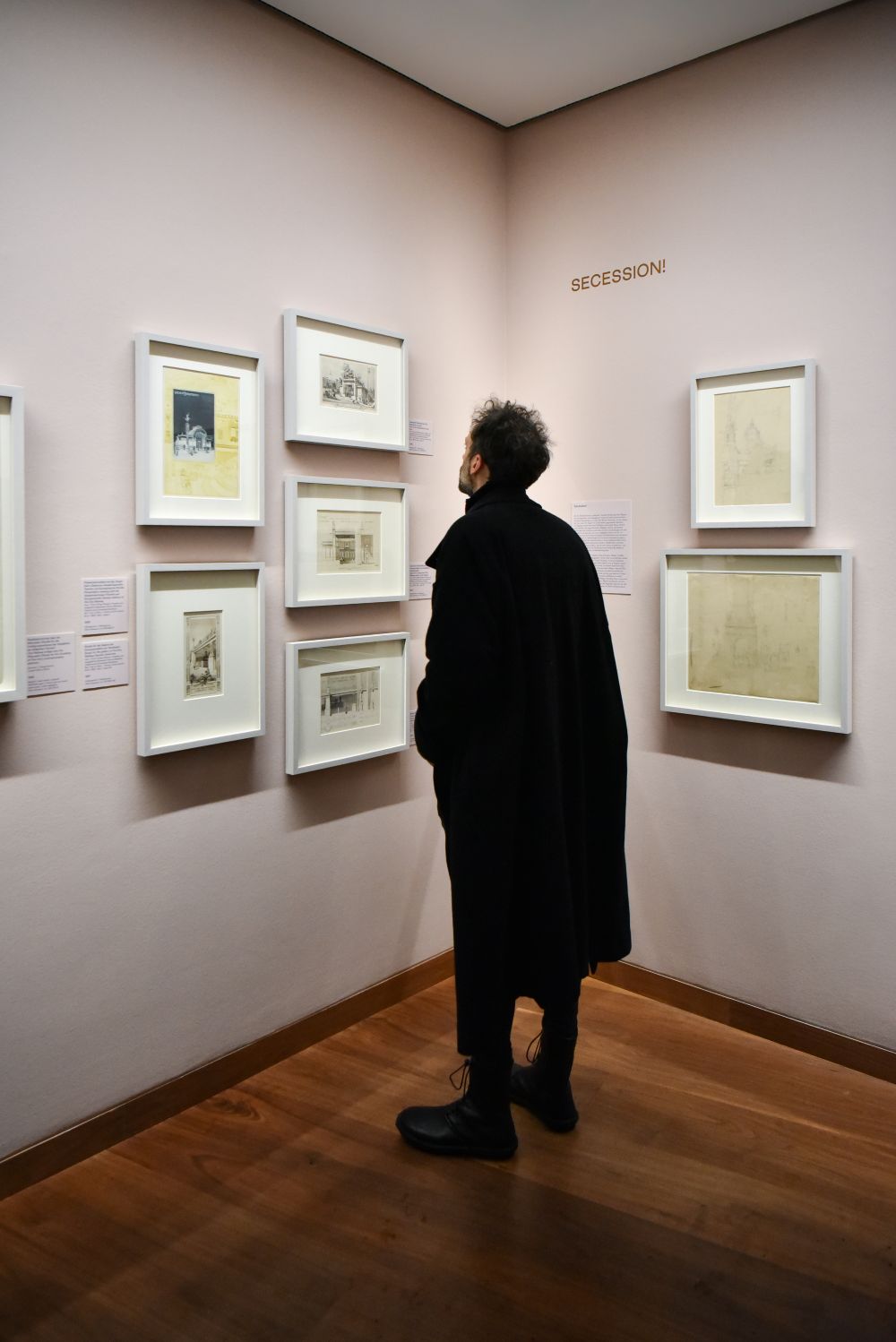
In 1897 the Vienna Secession was founded, and in 1898 its famous building appeared — not just an exhibition pavilion, but an architectural signboard of a new age.
In only ten or twelve years — from Hôtel Tassel to Russian Art Nouveau railway stations, banks, apartment houses and mansions — European architecture crossed a distance that earlier styles had needed generations to travel. That is why Art Nouveau seems so young against the background of the centuries-old order tradition, and so abrupt. A few years, a few cities, a few houses, a few exhibitions, a few programmatic texts — and European architecture could no longer pretend that modernity did not exist.
Russian Art Nouveau as a Rapid Eastern Eruption
Russian Art Nouveau is important in this story precisely as evidence of the incredible speed of the new style.
It was not a simple repetition of Belgian Art Nouveau or the Viennese Secession. In Russia, modernism quickly absorbed different impulses: the Brussels flowing line, Viennese flatness and graphic clarity, northern material weight, national-romantic motifs, metal, glass, ceramics, majolica and granite.
In Petersburg, Art Nouveau was especially connected with the urban fabric of apartment buildings, banks, commercial buildings, railway stations and mansions. It often became stricter, more northern, more stone-like. Unlike Moscow’s decorative fantasy, Petersburg Art Nouveau was often more restrained: it loved granite, ceramic cladding, metal details, large planes of façade, asymmetry and an expressive silhouette.
At the same time, the connection with Vienna was not accidental. N. L. Danilova’s study of decorative motifs of the Vienna Secession in the architecture of Petersburg directly examines the influence of Otto Wagner and the masters of the Wagnerschule on the formation of Art Nouveau in Petersburg architecture.
Moscow responded differently — more pictorially, expressively and theatrically. There, modernism is often associated with the name of Fyodor Schechtel. His Ryabushinsky House became one of the principal symbols of Moscow Art Nouveau: a wave-like staircase, organic interior plasticity, and the merging of architecture, furniture, stained glass and decorative detail into a single artistic organism.
Thus Russian Art Nouveau almost immediately became an independent version of the pan-European movement. Brussels gave the first explosion, Vienna gave discipline and theory, and Petersburg and Moscow showed how quickly new architectural energy could become the language of a large city.
The Exhibition at the Museum for Architectural Drawing: A Return to the Origins
The exhibition Otto Wagner – Architect of Modern Life / Otto Wagner – Architekt des modernen Lebens closed at the Berlin Tchoban Foundation — Museum for Architectural Drawing on May 17, 2026.
Formally, it was a chamber exhibition of architectural graphics. In substance, it was an important event in the discussion of the origins of European Art Nouveau and early modernism.
The exhibition was created in cooperation with the Wien Museum, where much of Otto Wagner’s legacy is held. Museumsportal Berlin emphasizes that this was the first presentation of Wagner’s drawings in Berlin and the first exhibition of its kind in Germany in more than sixty years.
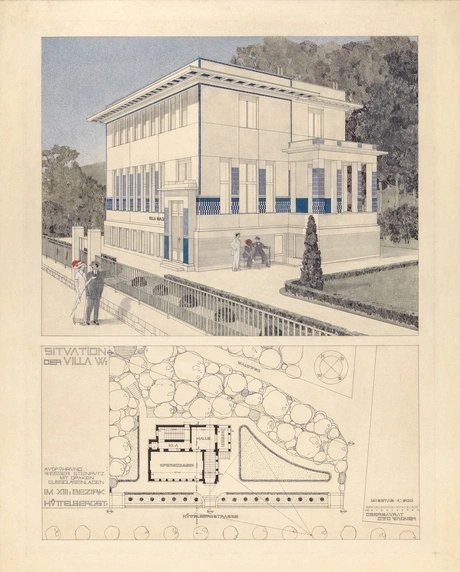
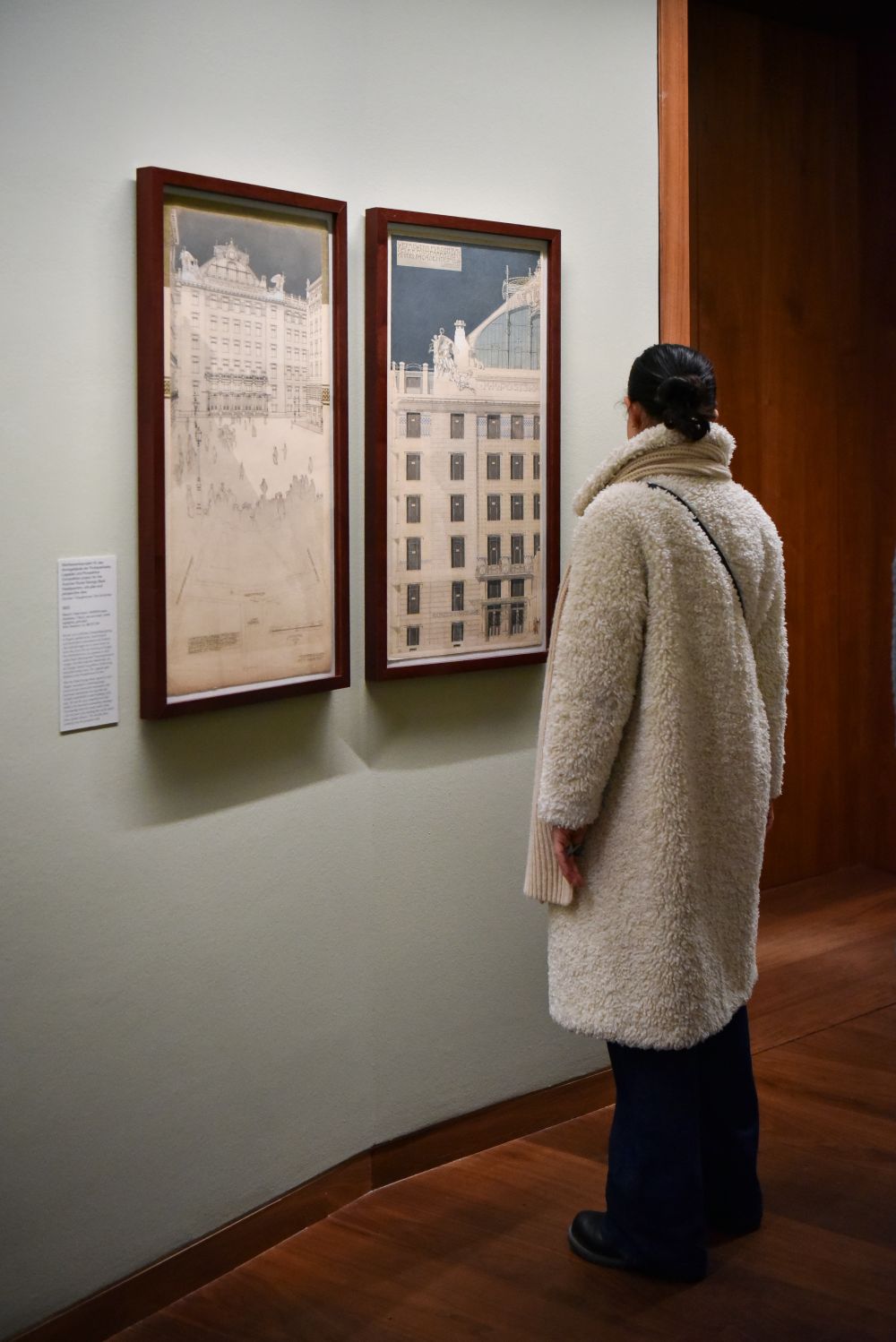
Here Wagner was presented not only as the author of famous Viennese buildings, but also as an architect who first drew modernity. His graphic work is not merely preparation for construction; it is an independent form of persuasion. Wagner shows the city of the future before that city has even received the right to be built.
Wagner: From Historicism to a New Style
Otto Koloman Wagner was born in 1841 and died in 1918, at the very fracture point of old Europe.
Britannica describes him as an Austrian architect and teacher usually regarded as one of the founders and leaders of the modern movement in European architecture.
Wagner’s main turn did not consist in a rejection of beauty, but in a change in its source. Beauty no longer had to copy past styles. It had to arise from purpose, construction, material, the movement of the city and the real needs of modern human beings.
His first clear steps toward a new language appear in the late 1890s: the houses on Linke Wienzeile, especially the Majolikahaus of 1898–1899, and the stations of the Vienna Stadtbahn. The Postal Savings Bank in Vienna, built in 1904–1906 and expanded in 1910–1912, became the mature culmination of this path.
If one considers the Postal Savings Bank Wagner’s main modernist work, then more than ten years indeed pass between Hôtel Tassel and Wagner’s culmination. But it is precisely in these years that the most important transformation occurs: modernism turns from a decorative wave into a method of modern architecture.
Wagner occupies an intermediate but central place. He is not yet a modernist in the strict sense of the 1920s, not Le Corbusier and not Mies van der Rohe. But without him it is difficult to imagine the transition from nineteenth-century historicism to twentieth-century architecture. He stands on a border: one foot still in the culture of drawing, ornament and representation, the other already in the world of function, material, infrastructure and the city.
Vienna as a Laboratory of Modernism
European modernism of the late nineteenth century was not a single style, but a network of related yet different artistic movements.
He did not simply decorate the new age — he designed it.
French Art Nouveau, the Belgian line of Horta and van de Velde, German Jugendstil, Gaudí’s Catalan version, northern modernism, Russian Art Nouveau and the Vienna Secession all formed part of this network.
Vienna occupies a special place in it. There, earlier than in many other centers, modernism began to turn from a decorative style into an architectural program for a new society. The Vienna Secession was not simply a question of ornament. It was a cultural break with academic historicism, with the architecture of façade quotations, with the habit of thinking about a modern building through past styles.
Wagner is the central figure here. He translated modernism from the realm of decoration into the realm of architectural method. He was interested not only in façades, but also in urban flows, transport, hygiene, banks, stations, engineering and mass life. In this sense, he did not simply decorate the new age — he designed it.
The most accurate formulation would be this: Horta gave modernism its first powerful architectural image, while Wagner gave it an urban, engineering and theoretical program. With Horta, the new style is born in a private house. With Wagner, it enters the streets, the very tissue of the modern metropolis.
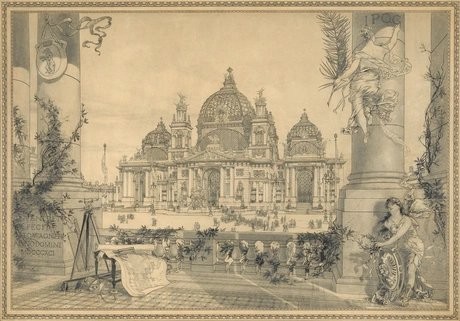
The choice of Berlin was not accidental. Wagner studied at the Berlin Bauakademie, was connected with the legacy of Karl Friedrich Schinkel, and later took part in competitions for Berlin Cathedral and the Reichstag building. These projects were not realized, but they allow the exhibition to connect the Viennese history of modernism with Berlin’s architectural context.
For the Tchoban Foundation, this was an especially precise fit. The Museum for Architectural Drawing deals not simply with architecture, but with drawing as an autonomous medium. Wagner is therefore shown here not as a “Viennese classic in general,” but as a master of paper strategy.
His sheets were tools of persuasion. DBZ uses a very precise phrase: Waffen aus Papier — “weapons of paper.” This is not a metaphor for beauty’s sake. Wagner really did wage a battle for new architecture first through images: through the spectacular sheet, exhibition graphics, competition perspective, watercolor, gold and carefully staged urban view.
Photo Gallery: Paper, Gold, Perspective, Persuasion
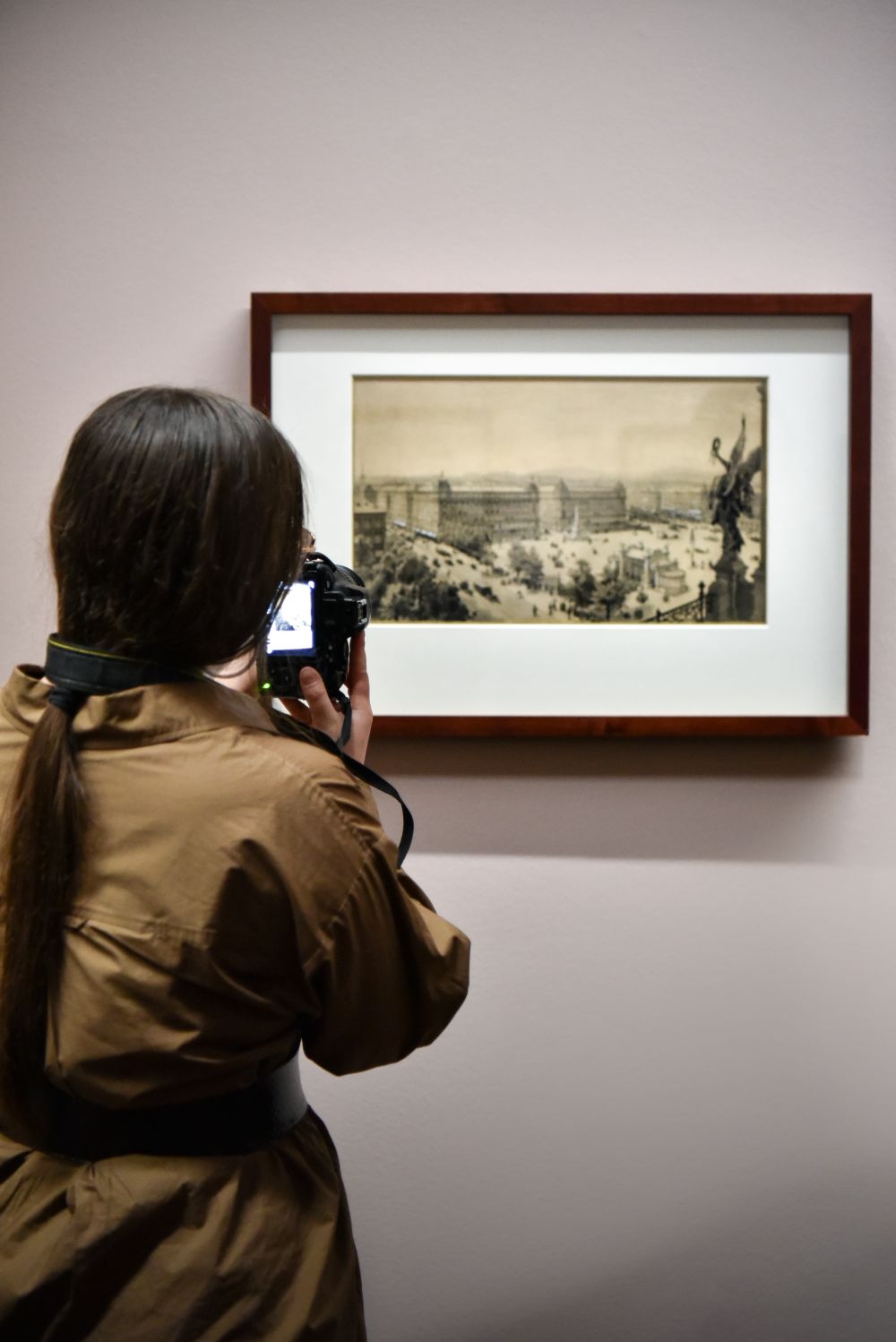
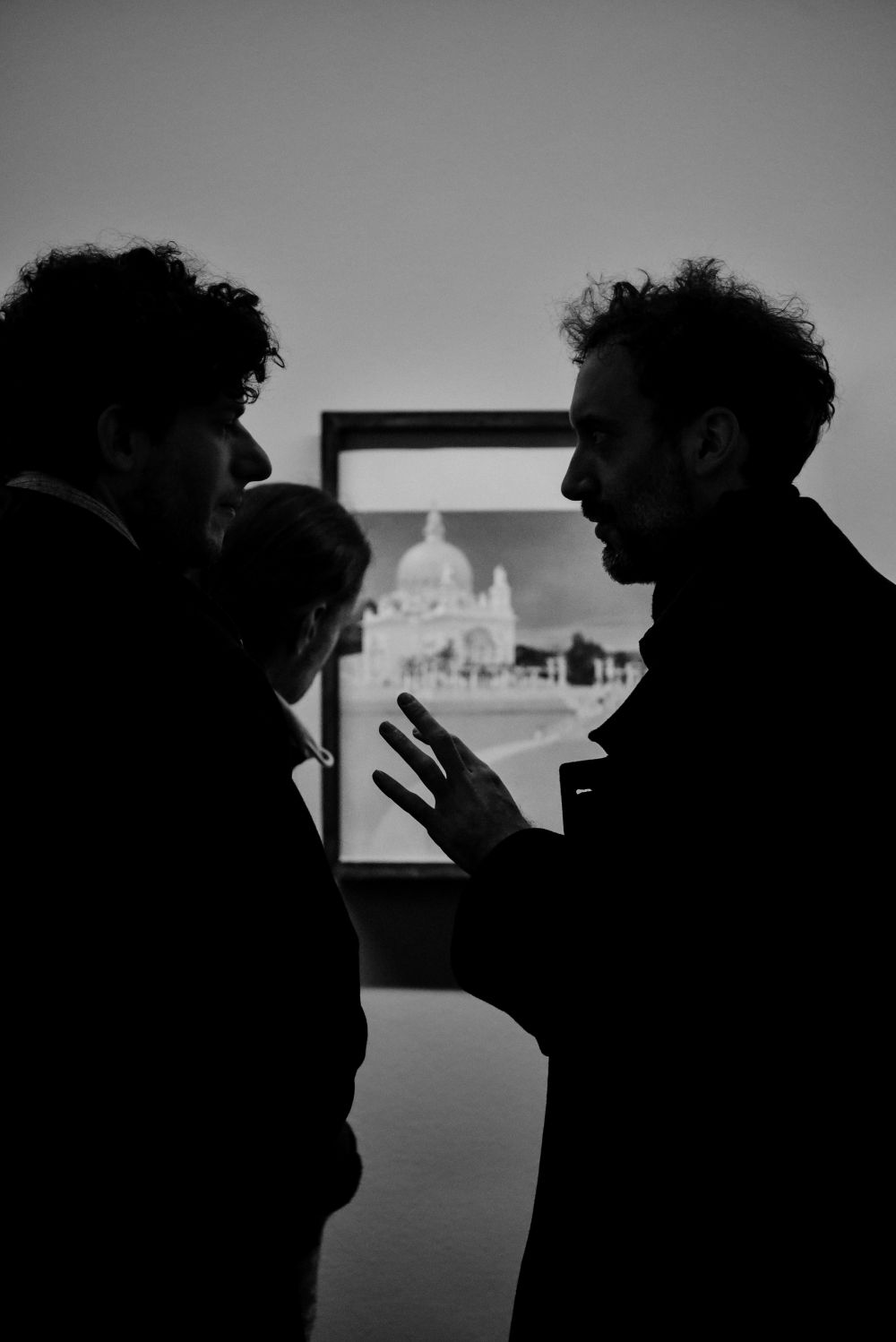
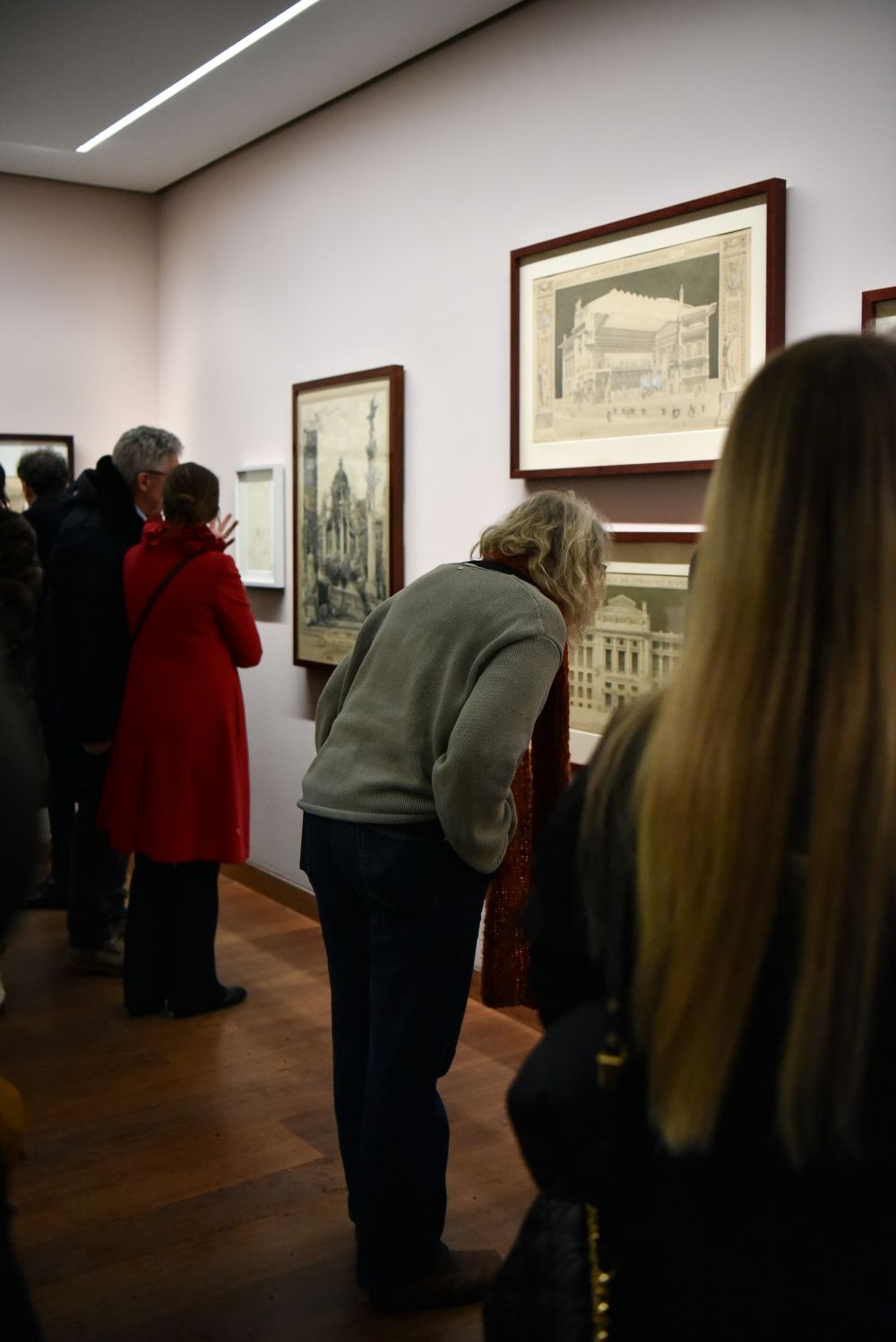
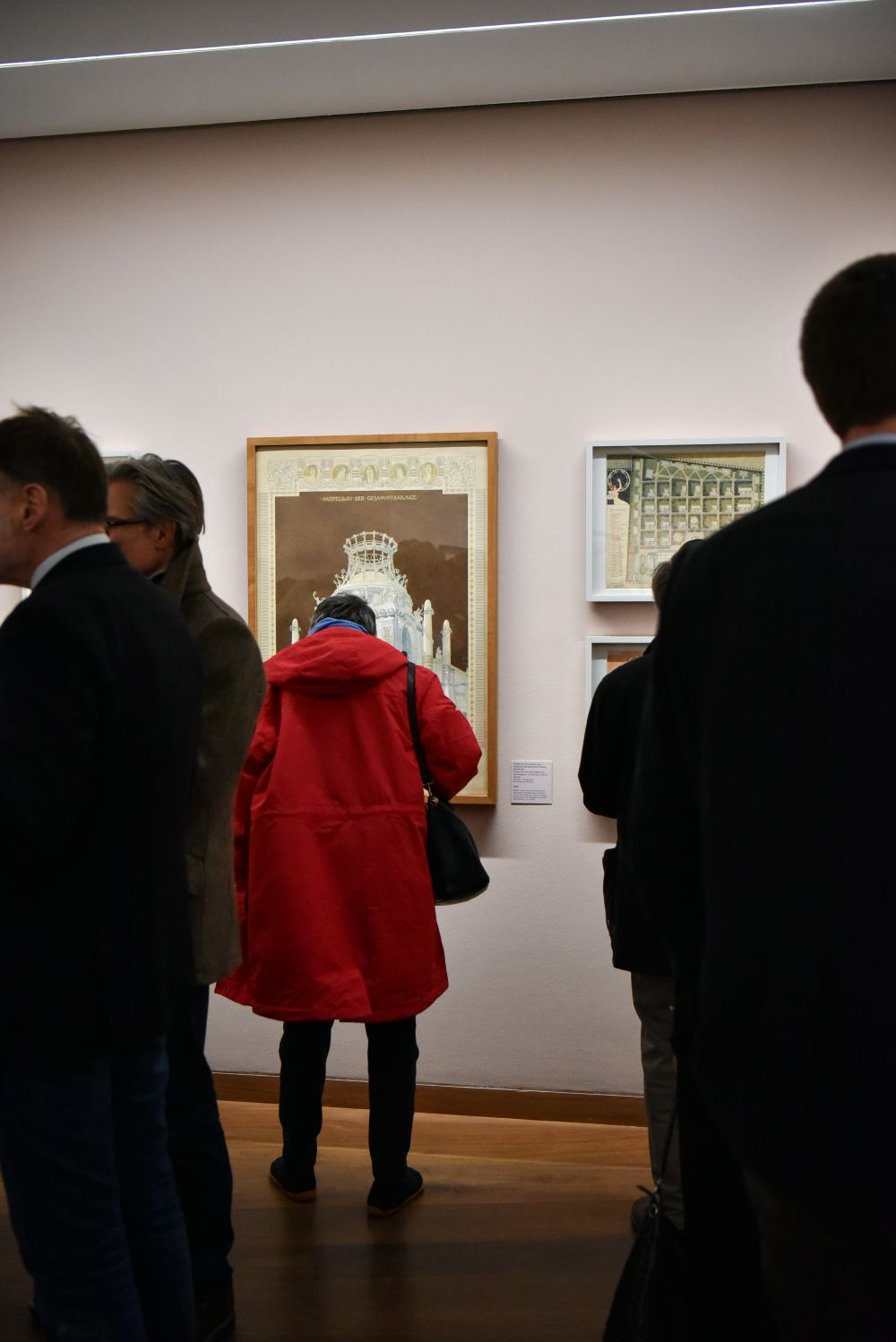
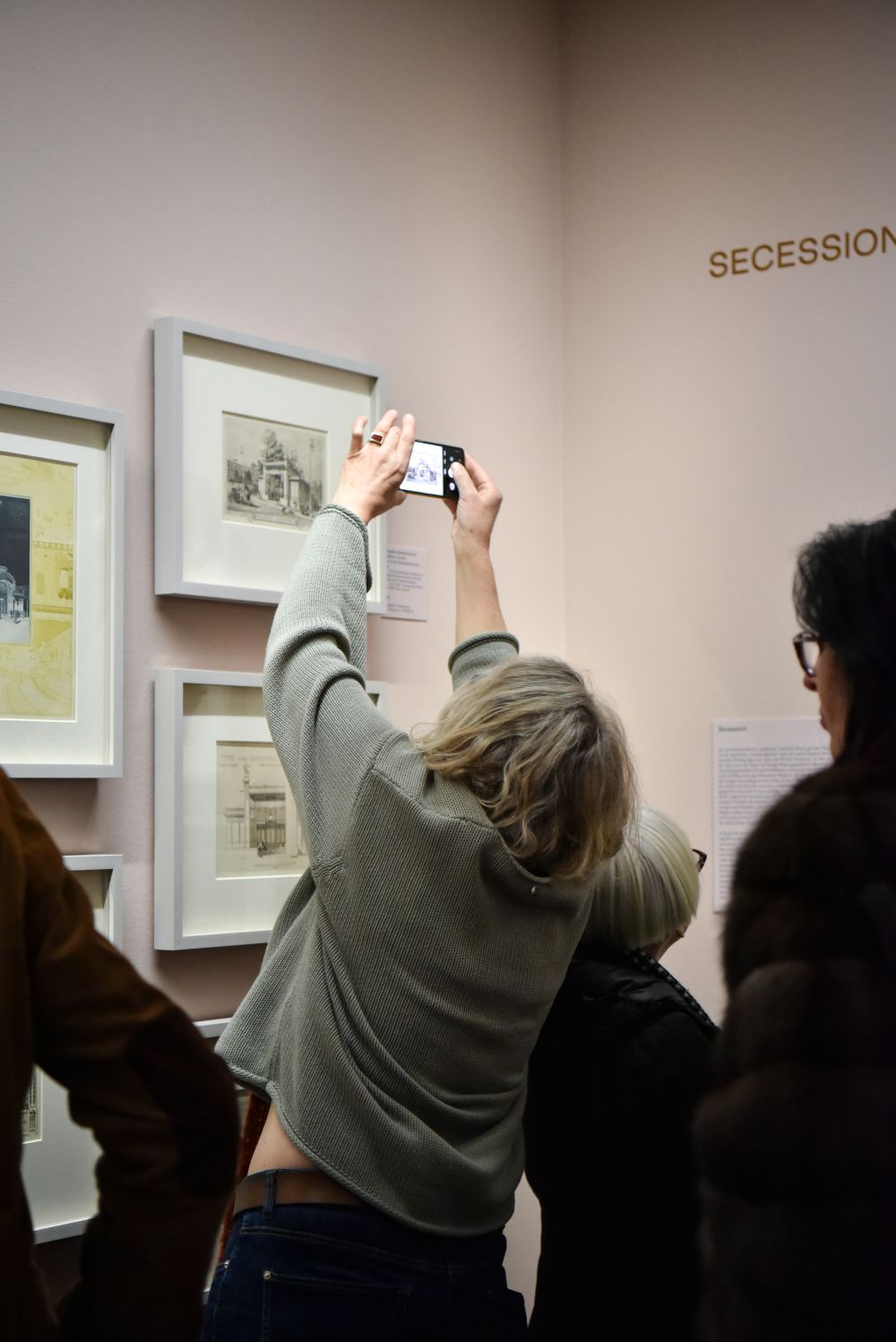
The exhibition’s photographic documentation shows how architectural drawing became a public argument.
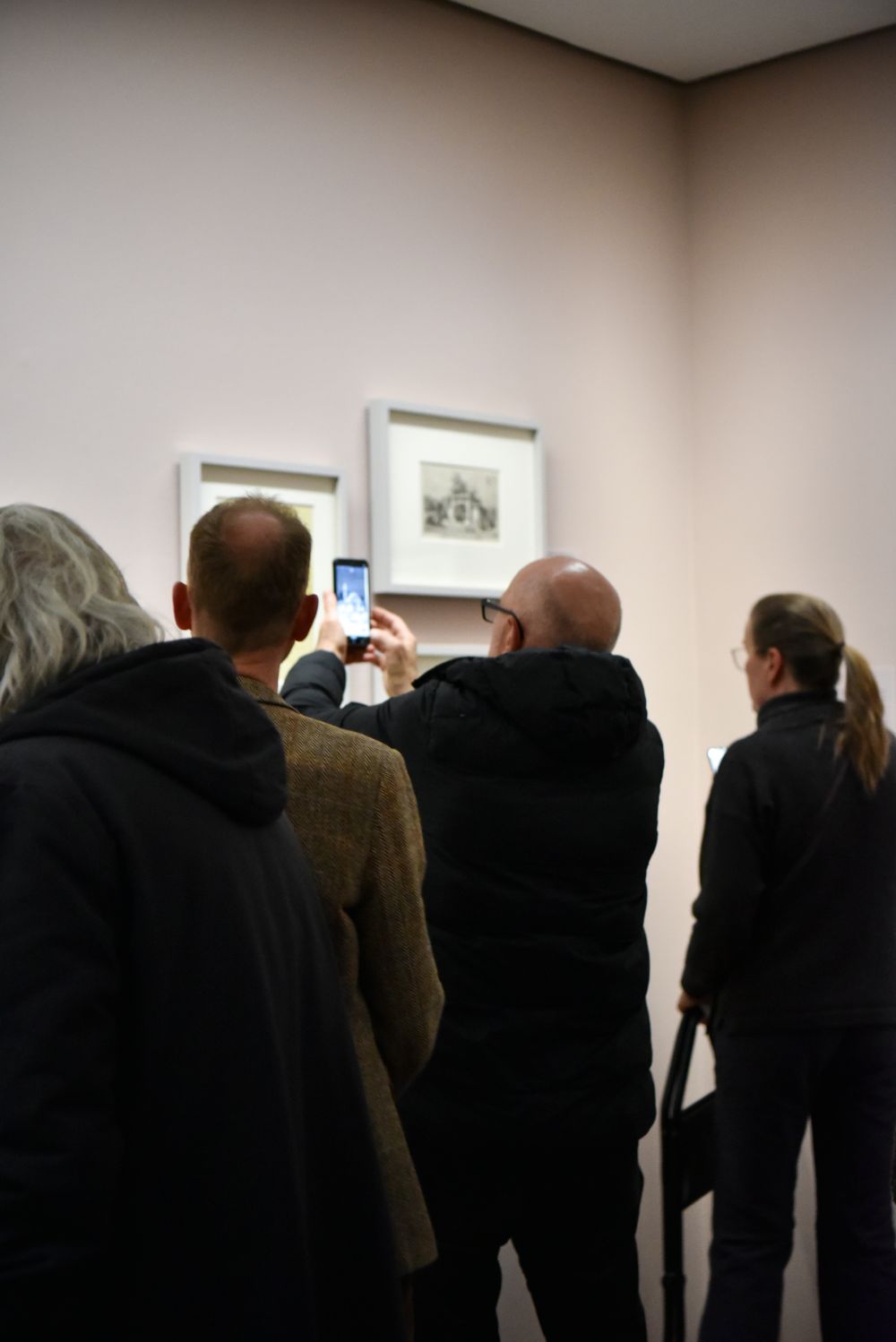
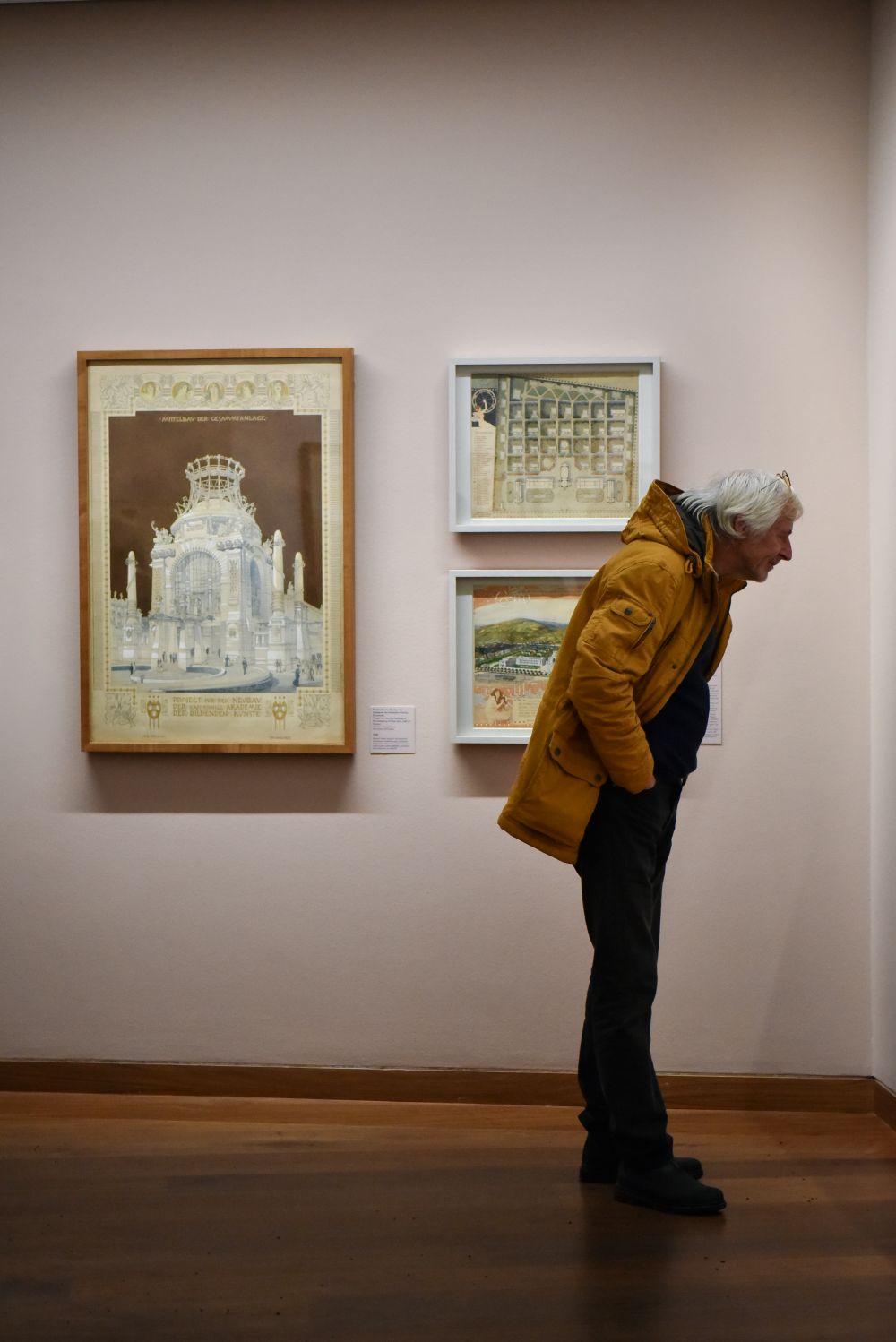
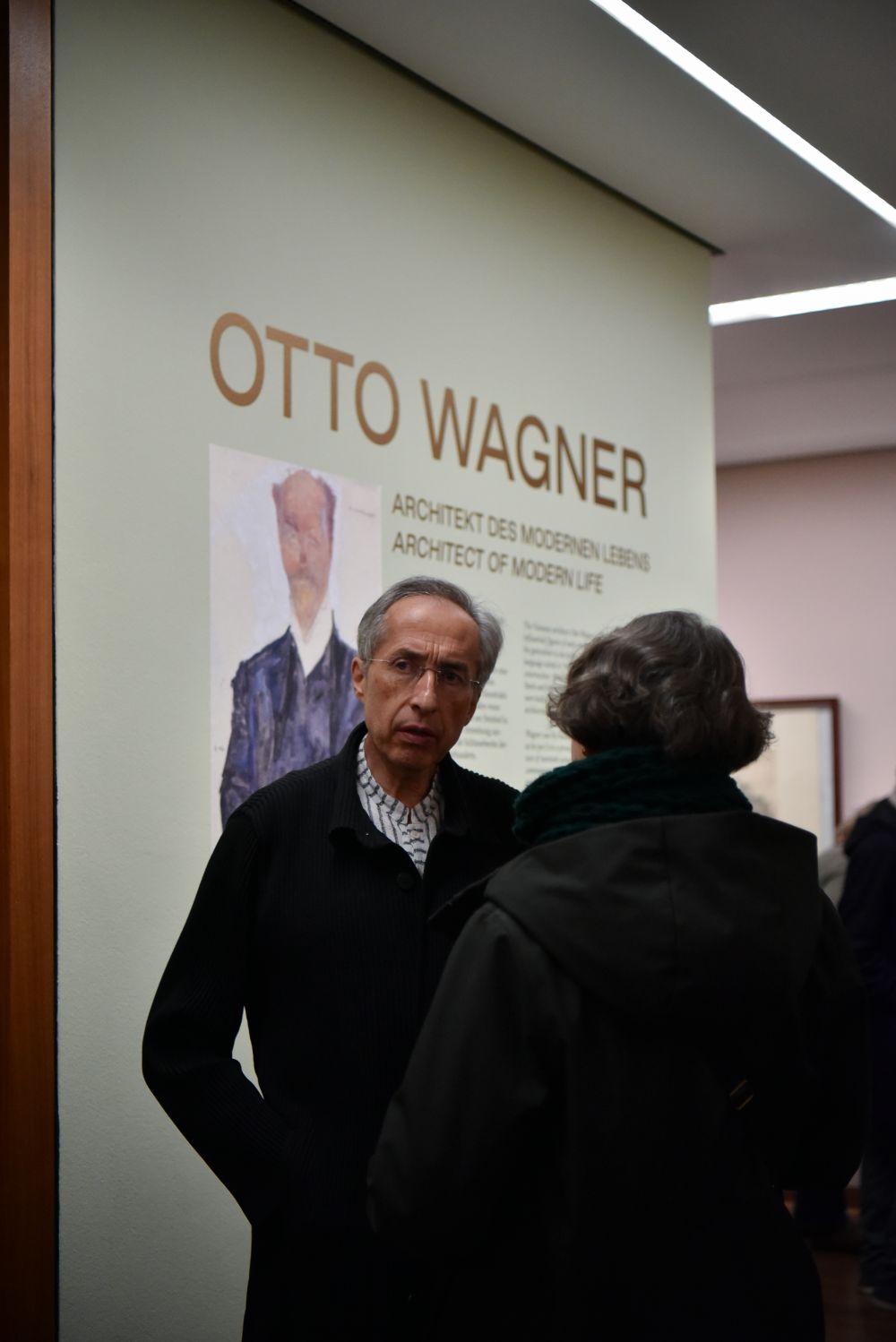
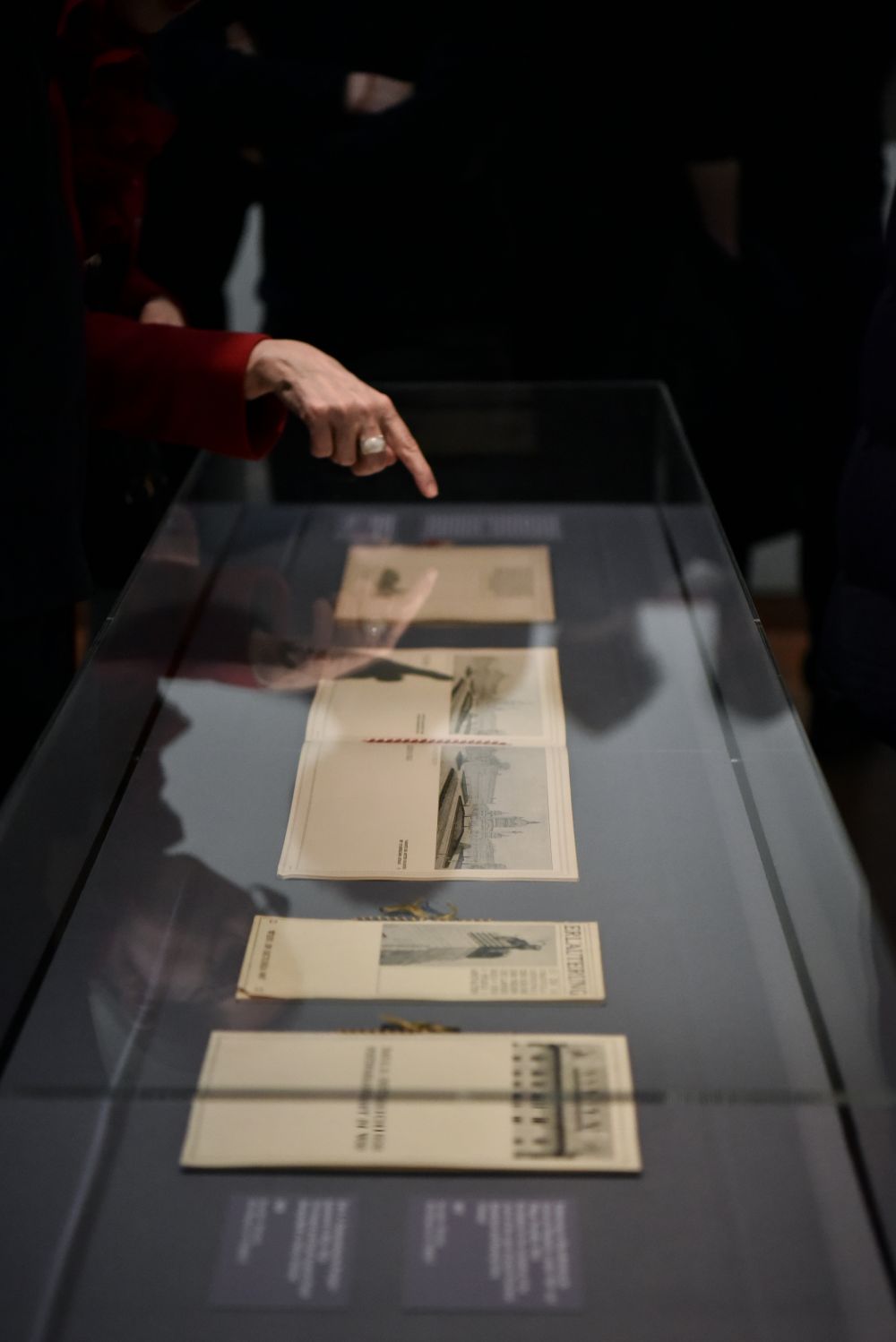
The gallery views by Nadja Fedorova capture the density of the show: sheets, walls, frames, reflections, details, visitors and the peculiar silence of architectural graphics. In these rooms, modernity is still paper, but already powerful enough to behave like a built world.
The Tchoban Foundation and the Viennese Collections: Not the First Encounter
The current exhibition does not look like an accidental guest appearance by Viennese material in Berlin.
The Tchoban Foundation has worked with Viennese collections before. In 2016 the museum showed Architectural Master Drawings from the Albertina, an exhibition of architectural masterpieces from Vienna’s Albertina. Against this background, the cooperation with the Wien Museum around Otto Wagner looks like a continuation of an already established line.
The Berlin museum becomes a place where Vienna’s culture of architectural drawing regularly receives a new stage. This is important symbolically as well: Vienna gave modernism one of its strongest intellectual programs, and Berlin, through the Tchoban Foundation, now returns that program to the field of contemporary architectural discussion.
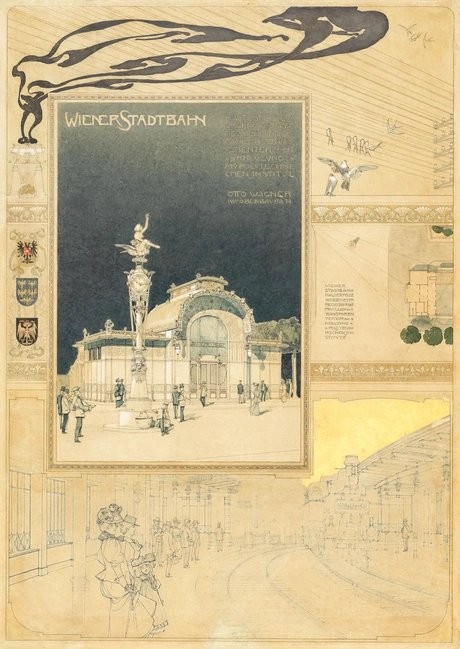
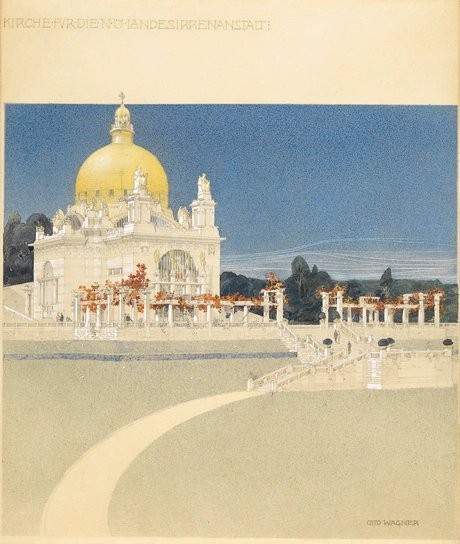
The exhibition is organized in six thematic sections and leads the viewer from Wagner’s early historical works to mature modernist projects and late buildings freed from traditional ornament. Among the key subjects are Berlin Cathedral, the Reichstag, the Vienna Stadtbahn, the Postal Savings Bank, the Church of St. Leopold, and urban and competition projects.
The material side of the display is especially strong. These sheets are made in pencil, pen, watercolor, white highlights, gold paint and spray technique. This is architecture before construction, yet already possessing the full force of artistic impact. The viewer sees not only the project, but the mechanism of persuasion: how line, perspective, gold, human figures, dramatic angle and scale turned an architectural sheet into an image of the future.
World-Architects rightly emphasizes that drawing was Wagner’s main medium for expressing architectural ideas: the sheets were meant not only to convey technical information, but also to impress clients and the wider public.
The Utopian City on Paper
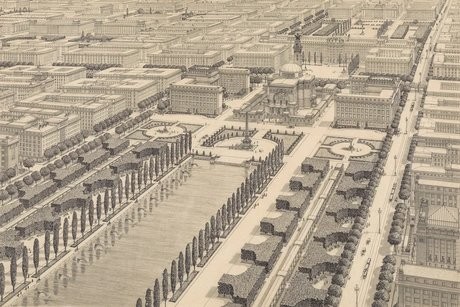
One of the exhibition’s most revealing materials is Wagner’s ideal project for Vienna’s 22nd district.
World-Architects closes its review almost programmatically: “No lover of architectural drawings should miss this opportunity.” It also notes that the Tchoban Foundation and the Wien Museum made these works accessible in Germany for the first time in more than sixty years, and in Berlin for the first time ever.
What is especially valuable is that the tone of the reviews does not reduce everything to anniversary enthusiasm. Professional criticism also includes an important observation: the exhibition places its emphasis on façades, sheets and external image, and the viewer sometimes has to reconstruct the buildings’ internal spatial atmosphere on their own. This does not weaken the exhibition, but it does reveal its limits.
Measured Criticism: Chamber Scale as Strength and Limitation
The main virtue of the exhibition is its precision.
It does not try to tell “all of Wagner” and does not turn him into a museum icon. It chooses one nerve — architectural drawing — and through it shows the birth of modern architecture.
But this is also its limitation. For a prepared viewer, the exhibition is rich and convincing. The broader public may have missed a denser connection between the sheets and the built buildings: photographs of their current condition, maps of Vienna, comparisons of “project and realization,” explanations of how exactly these ideas moved into the architecture of Petersburg, Prague or Berlin.
There is another risk as well: the beauty of the graphics can obscure the radicality of the thought. Wagner’s sheets are so elegant that the viewer can easily enjoy them as decorative art. But Wagner’s true meaning is not decorative effect. It lies in the demand that architecture respond to its own epoch. His modernism is beautiful, but its beauty is no longer retrospective — it is programmatic.
And Again, About Graphics
Today architecture again exists in a world of images: renderings, presentations, visualizations, competitions and digital fantasies.
The architectural image has never been innocent. It has always promised, persuaded and sold the future.
This is why the Wagner exhibition feels unexpectedly contemporary. It reminds us that the architectural image has never been innocent. It has always persuaded, promised, sold the future and created trust in a world not yet built.
Wagner did this on paper. Contemporary architects do it in a digital environment. But the question is the same: what exactly do we show society as the image of future life?
That is why the exhibition at the Tchoban Foundation is not only a retrospective of a Viennese master. It is a conversation about how modernism was born from the union of city, technology, drawing and cultural ambition. And in this conversation Otto Wagner remains one of the central figures: an architect who understood that modernity had first not only to be built, but also convincingly represented.
Against the background of the centuries-old order tradition, Art Nouveau is indeed young. It is amusing that if one counts the history of the last great coming of the order in world architecture from the appearance of the Ospedale degli Innocenti in Florence — begun by Filippo Brunelleschi in 1419 — to Victor Horta’s Hôtel Tassel in Brussels in 1892–1893, the result is almost exactly five hundred years. Strange that Nostradamus wrote nothing about this — or perhaps architectural historians simply read him badly.
But it is precisely this youth that makes Art Nouveau so sharp: a few years, a few cities, a few houses, a few drawings — and European architecture could no longer return to its former orderly innocence, because the pandemic of the new style had already seized almost the entire architectural planet.
Otto Wagner, of course, was one of the main carriers of this global pandemic: one of those who carried the virus of modernism from private houses and artistic circles to stations, banks, urban arteries and whole countries. And against this noble architectural disease, even after 130 years, not a single reliable order-based vaccine has yet been found.
This English version was prepared as a site-ready magazine page for publication on archcabinet.online.
- Original Russian article: Gorod 812, May 17, 2026.
- Author of the article and English adaptation: Aleksei Sholokhov.
- Website branding: archcabinet.online.
- Cover and exhibition photographs: Nadja Fedorova © Nadja Fedorova, as credited in the original publication.
- Otto Wagner drawings: © Wien Museum / visitBerlin, as credited in the original publication.
Otto Wagner in Berlin: How Viennese Modernism Became an Event Again
This English magazine-format article was prepared for publication on archcabinet.online.
https://archcabinet.online/
End of feature